
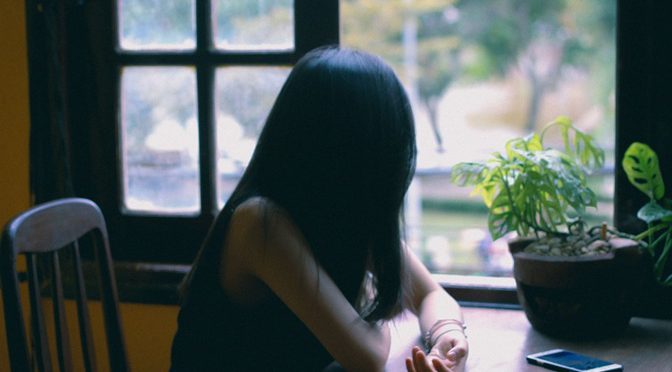
The day I turned thirteen, I didn’t wake up feeling different. No magical transformation, no sudden clarity. Just the same messy room, the same anxiety about an upcoming exam, and the same feeling of being stuck between wanting independence and needing help. That’s the thing about being a teenager: you’re expected to have it all figured out, but most days, you’re just trying to figure out who you are between one breath and the next.
Fire, chaos, angst, happiness, anger: a teen’s got it all swirling inside at once. But more than anyone else, a teenager often doesn’t know how to handle it.
The definition of being a teenager has changed a lot in the past decade. Expectations and standards have been raised, if not doubled. This is mainly because of the recent addition of social media to the mix, making it extremely difficult for any teen to adapt.
Sometimes, I think each teenager should be born with a personalised guidebook on how to live a peaceful life, though I doubt it would be of much help. Even the calmest and most obedient teenager can be stubborn about the life choices they make, and no book can tell us what to do.
I think that is what feeds our anger: being challenged on the decisions we make, being questioned, doubted, and underestimated over and over again. I don’t like being told what to do, and most of my friends feel the same way. Moreover, privacy also plays a very important role in my life. Invading my personal time and space is like disrespecting my boundaries. It’s not rebellion for the sake of it, but the desperate need to prove that our thoughts and our choices matter. That we matter.
Speaking of time, I don’t actually have any. Because, like many kids my age, I’m drowning in studies, extracurriculars, and friendships. Yet somehow, amid the chaos, there are moments when I lose myself completely: in the pages of a book, crocheting while listening to Spotify, or sketching in the margins of my notebook. These moments remind me I’m not drowning but learning to swim.
And also, like many kids my age, I’ve been a victim of peer pressure. Not FOMO, because I’ve always felt included, but more the pressure to have what others have. I don’t need to fit in. I like myself as I am. But after talking with my friends, I’ve identified our generation’s real issue: we’re desperate for acknowledgement. Yes, acknowledged. Not accepted, not respected, but noticed, as if it’s a sign that confirms our existence, knowing that everyone sees us and knows about us. It’s exhausting, really, this constant performance of being seen while simultaneously wanting to disappear.
It gets even more complicated when it comes to fitting in. Don’t misinterpret this; the need to fit in still exists, but it’s more nuanced than people think. As you get older, acting mature and studious becomes your main focus. You don’t necessarily need to be like that, but appearances matter a lot in school. I’ve also noticed that teenagers who have a bit more freedom than others tend to focus more on their studies. They are at least aware of where they lack and try to work on it. Kids also start realising their own mistakes without parents needing to point them out. Because society around you has become much more straightforward, it no longer whispers judgments behind closed doors; it tells them straight to your face, and I think that’s one of the few good things about it.
All this has led me to realise that structured and guided freedom prepares us for the world more than anything else at our young and easily influenced age. We are easily drawn to the attractions of social media, popularity, and crushes. But those who manage to hold themselves back will thrive in competitive and academic environments. Yet here lies the paradox: the same restrictions that protect us can also suffocate us, raising the question of whether we will ever truly learn to fly or keep bumping against invisible ceilings.
There’s an opinion going around on Pinterest that I completely agree with: “Seventh grade = terror/downfall.” I remember sitting in my room one evening during seventh grade, staring at a test I’d scored very poorly on, feeling like the world was caving in. My parents didn’t understand why I was crying. It was just one test. But it wasn’t. It felt like proof that I was falling behind, that everyone else had figured out this whole “teenager” thing except me. I personally struggled a lot in seventh grade, both academically and socially. Looking back, I realise how deeply that phase shaped me. But you can just as easily recover from it, as long as you’re willing to grow, especially in eighth grade. It is essential to recognise that, regardless of how well prepared you are or how confident you feel, a twinge of doubt will always begin to spread through your body as you enter high school. It is what you would call inevitable.
That is why many people need a role model. Many would consider their mother or father a role model until the age of eleven or twelve, but by the time they are thirteen, that shifts fast. You start looking for people who have walked through the fire and come out standing, people who prove that confusion doesn’t have to be permanent. It depends on having the right kind of role model: someone you can look up to, learn from, and be inspired by. Recently, I’ve been listening to a few podcasts and learned about a fifteen-year-old visually impaired boy called Prathamesh Sinha. Despite being visually impaired, he is a brand ambassador for Thinkerbell Labs, the creators of Annie, the world’s first self-learning Braille device. Instead of letting his disability limit him, he has built a sense of discipline and clarity that many people with every advantage still struggle to find. What stayed with me wasn’t just his success but the quiet resilience behind it. It was really eye-opening to learn about him. Stories like his give me hope on days when I feel like I’m drowning. They remind me that strength isn’t about never struggling. It’s about choosing to keep going anyway. And this is not just one example; there are many others out there who have worked hard for their position, and they truly show that age does not matter.
So here’s what I’ve learned about being a teenager: it’s messy, contradictory, and often lonely even when people surround you. But it’s also where we learn who we are beneath all the expectations. The confusion isn’t our enemy; it’s the growing pain of becoming who we are. And maybe that’s the most honest answer to how you understand a teenager: you accept that we’re all works in progress, simultaneously breaking apart and piecing ourselves back together, one uncertain day at a time. Just like I was on the day I turned thirteen, standing still, yet somehow already changing.
Authored By: Prisha Ambi, 13 years old